Overview
 Bunion pain can be debilitating and bunion surgery can be a scary decision most people would rather put off. I know. I've been there and I've learned that IF you know what to expect ahead of time and what questions to ask your doctor, you will lessen your fear, make better decisions, and increase your success with bunion surgery and bunion surgery recovery. No matter how good your podiatrist or bunion surgeon is, the truth is, no one knows exactly what's right for you except you and that's what can make your decision so scary. What if the surgery doesn't really fix the problem, and like others you read about or hear about, you end up worse off than before? It's not always clear what to do, but with the right information, questions, and support, it can be an easier decision for you.
Causes
Abnormality in foot function, particularly a pronated foot. This is probably the most important and common causative factor. Family history of bunions. Narrow toed dress shoes and high heels may contribute to the formation of a bunion. Rheumatoid and Psoriatic arthritis. Genetic and neuromuscular disease (eg. Down's,Ehler-Danlos and Marfan's syndromes) resulting in muscle imbalance. Limb length inequality can cause a bunion on the longer limb. Generalized laxity of the ligaments. Trauma to or surgery on the soft tissue structures around the great toe (first metatarsal-phalangeal) joint.
Symptoms
Redness, swelling, or pain along the inside margin of the foot just behind the great toe. Moderate to severe discomfort at the bunion when wearing shoes, particularly if tight fitting. A painful callus may develop over the bunion. Sometimes a painful corn on the adjacent sides of the first and second toes. Irritation if there is overlapping of the first and second toes. Arthritis may cause stiffness and discomfort in the joint between the great toe and the first metatarsal. There may be a fluid filled cyst or bursa between the skin and the "bunion bone". Skin over the bunion may break down causing an ulceration, which can become infected.
Diagnosis
Bunions are readily apparent - the prominence is visible at the base of the big toe or side of the foot. However, to fully evaluate the condition, the foot and ankle surgeon may take x-rays to determine the degree of the deformity and assess the changes that have occurred. Because bunions are progressive, they don?t go away, and will usually get worse over time. But not all cases are alike - some bunions progress more rapidly than others. Once your surgeon has evaluated your bunion, a treatment plan can be developed that is suited to your needs.
Non Surgical Treatment
Conservative Treatment. Apply a commercial, nonmedicated bunion pad around the bony prominence. Wear shoes with a wide and deep toe box. If your bunion becomes inflamed and painful, apply ice packs several times a day to reduce swelling. Avoid high-heeled shoes over two inches tall. See your podiatric physician if pain persists. Orthotics. Shoe inserts may be useful in controlling foot function and may reduce symptoms and prevent worsening of the deformity. Padding & Taping. Often the first step in a treatment plan, padding the bunion minimizes pain and allows the patient to continue a normal, active life. Taping helps keep the foot in a normal position, thus reducing stress and pain. Medication. Anti-inflammatory drugs and cortisone injections are often prescribed to ease the acute pain and inflammations caused by joint deformities. Physical Therapy. Often used to provide relief of the inflammation and from bunion pain. Ultrasound therapy is a popular technique for treating bunions and their associated soft tissue involvement.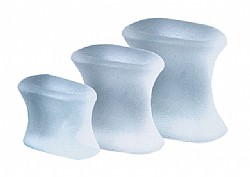
Surgical Treatment
Larger bunions often require the surgeon to move the entire bone over (1st metatarsal). This is accomplished by a cut or fusion at the bottom of the bone. The former technique, is called the Lapidus bunionectomy. Additionally, the repositioned bone is held in place with one or two surgical screws.
Prevention
To help prevent bunions, select your style and size of shoes wisely. Choose shoes with a wide toe area and a half-inch of space between the tip of your longest toe and the end of the shoe. Shoes also should conform to the shape of your feet without causing too much pressure.
Bunion pain can be debilitating and bunion surgery can be a scary decision most people would rather put off. I know. I've been there and I've learned that IF you know what to expect ahead of time and what questions to ask your doctor, you will lessen your fear, make better decisions, and increase your success with bunion surgery and bunion surgery recovery. No matter how good your podiatrist or bunion surgeon is, the truth is, no one knows exactly what's right for you except you and that's what can make your decision so scary. What if the surgery doesn't really fix the problem, and like others you read about or hear about, you end up worse off than before? It's not always clear what to do, but with the right information, questions, and support, it can be an easier decision for you.Causes
Abnormality in foot function, particularly a pronated foot. This is probably the most important and common causative factor. Family history of bunions. Narrow toed dress shoes and high heels may contribute to the formation of a bunion. Rheumatoid and Psoriatic arthritis. Genetic and neuromuscular disease (eg. Down's,Ehler-Danlos and Marfan's syndromes) resulting in muscle imbalance. Limb length inequality can cause a bunion on the longer limb. Generalized laxity of the ligaments. Trauma to or surgery on the soft tissue structures around the great toe (first metatarsal-phalangeal) joint.
Symptoms
Redness, swelling, or pain along the inside margin of the foot just behind the great toe. Moderate to severe discomfort at the bunion when wearing shoes, particularly if tight fitting. A painful callus may develop over the bunion. Sometimes a painful corn on the adjacent sides of the first and second toes. Irritation if there is overlapping of the first and second toes. Arthritis may cause stiffness and discomfort in the joint between the great toe and the first metatarsal. There may be a fluid filled cyst or bursa between the skin and the "bunion bone". Skin over the bunion may break down causing an ulceration, which can become infected.
Diagnosis
Bunions are readily apparent - the prominence is visible at the base of the big toe or side of the foot. However, to fully evaluate the condition, the foot and ankle surgeon may take x-rays to determine the degree of the deformity and assess the changes that have occurred. Because bunions are progressive, they don?t go away, and will usually get worse over time. But not all cases are alike - some bunions progress more rapidly than others. Once your surgeon has evaluated your bunion, a treatment plan can be developed that is suited to your needs.
Non Surgical Treatment
Conservative Treatment. Apply a commercial, nonmedicated bunion pad around the bony prominence. Wear shoes with a wide and deep toe box. If your bunion becomes inflamed and painful, apply ice packs several times a day to reduce swelling. Avoid high-heeled shoes over two inches tall. See your podiatric physician if pain persists. Orthotics. Shoe inserts may be useful in controlling foot function and may reduce symptoms and prevent worsening of the deformity. Padding & Taping. Often the first step in a treatment plan, padding the bunion minimizes pain and allows the patient to continue a normal, active life. Taping helps keep the foot in a normal position, thus reducing stress and pain. Medication. Anti-inflammatory drugs and cortisone injections are often prescribed to ease the acute pain and inflammations caused by joint deformities. Physical Therapy. Often used to provide relief of the inflammation and from bunion pain. Ultrasound therapy is a popular technique for treating bunions and their associated soft tissue involvement.
Surgical Treatment
Larger bunions often require the surgeon to move the entire bone over (1st metatarsal). This is accomplished by a cut or fusion at the bottom of the bone. The former technique, is called the Lapidus bunionectomy. Additionally, the repositioned bone is held in place with one or two surgical screws.
Prevention
To help prevent bunions, select your style and size of shoes wisely. Choose shoes with a wide toe area and a half-inch of space between the tip of your longest toe and the end of the shoe. Shoes also should conform to the shape of your feet without causing too much pressure.
